St. Augustine of Hippo
A restless seeker transformed by grace who became a bishop, Church Father, and one of Christianity’s most influential teachers.
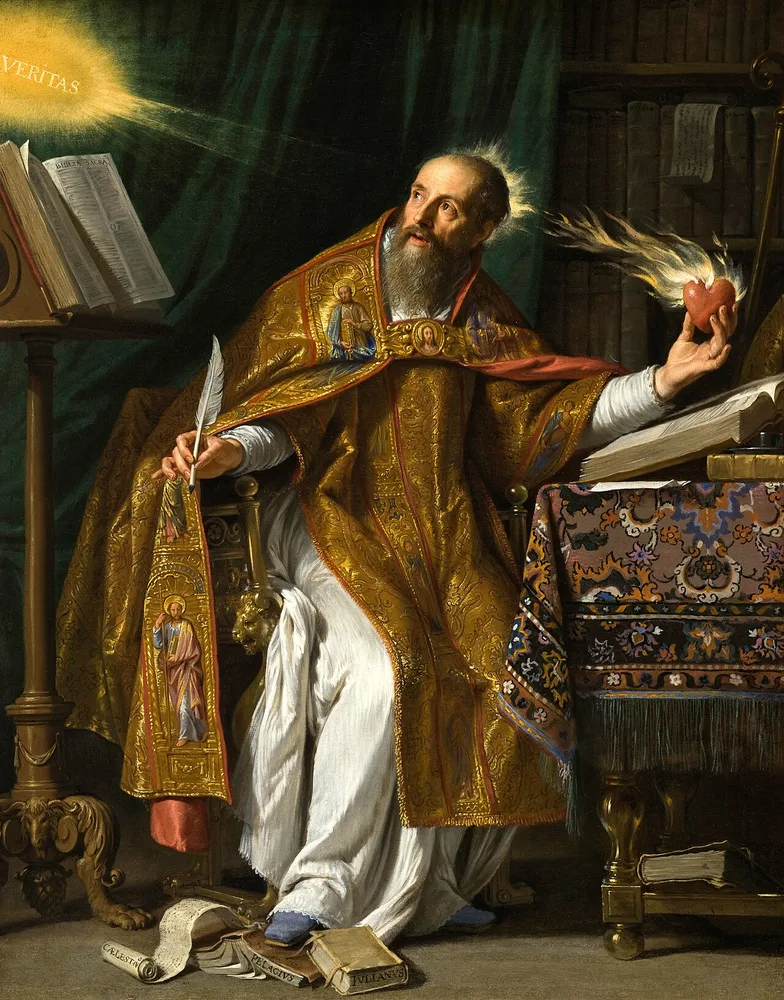
Image: Philippe de Champaigne — Public domain. Source and rights

Feast: August 28
Patronage and associations: Theologians, Printers and publishers, People seeking conversion, Brewers
Historical period: Late Roman North Africa (354–430)
The Memorial of St. Augustine, Bishop and Doctor of the Church, is celebrated on August 28 in the General Roman Calendar.
Quick facts
- Born
- November 13, 354, Tagaste, North Africa
- Died
- August 28, 430, Hippo Regius
- Vocation
- Bishop of Hippo and Doctor of the Church
- Major works
- Confessions and The City of God
- Baptized
- Easter Vigil, 387, by St. Ambrose
Who Was St. Augustine of Hippo?
St. Augustine was born in Tagaste in Roman North Africa in 354. His mother, Monica, was a committed Christian; his father, Patricius, received baptism late in life. Augustine was intellectually gifted and ambitious. He studied rhetoric in Carthage and sought truth through philosophy, career, relationships, and the Manichaean religion. He later admitted that he wanted God—but not yet the change that surrender to God would require.
Augustine became a successful teacher of rhetoric and eventually moved to Milan. There he listened to Bishop Ambrose, initially because he admired Ambrose’s speaking ability. Over time, Ambrose’s preaching helped Augustine see that Scripture could be read intelligently and that Catholic faith was not the crude superstition he had dismissed. Friends, philosophical study, his mother’s prayer, and the witness of Christian conversion all prepared the way.
His struggle came to a crisis in a garden in Milan. Hearing a childlike voice repeat “take and read,” Augustine opened St. Paul’s letters and encountered a passage calling him away from sinful habits and toward Christ. He received baptism from Ambrose at the Easter Vigil in 387. Conversion did not erase his personality or end every struggle. It redirected his powerful mind and desires toward God.
After returning to North Africa, Augustine formed a community devoted to prayer and study. He was ordained a priest and later became Bishop of Hippo. For decades he preached, cared for his people, answered controversies, and wrote on grace, the Trinity, Scripture, the Church, freedom, and society. His Confessions tells the story of a soul addressed by God; The City of God helped Christians interpret Rome’s collapse without confusing any earthly state with God’s kingdom.
Augustine died in 430 while Vandals besieged Hippo. His influence is enormous, but his story remains personal. He knew intellectual doubt, disordered desire, grief, friendship, pastoral pressure, and the need for mercy. He teaches that conversion is not becoming less human. It is allowing grace to heal our loves so that the heart can finally rest in the God for whom it was made. Reading him well also requires patience: individual lines belong within a lifetime of preaching, controversy, revision, and pastoral care.
What St. Augustine of Hippo Teaches Us Today
1. Questions can become a road to God
Augustine’s searching was not wasted when he became willing to follow truth wherever it led.
2. Conversion reorders our loves
Christian change is deeper than collecting answers; grace teaches us to desire what is truly good.
3. A gifted mind still needs humility
Augustine learned through Scripture, preaching, friendship, and correction rather than treating intelligence as self-sufficient.
A Prayer Asking for St. Augustine’s Intercession
God of truth and mercy, you met St. Augustine in his questions, failures, and restless desire. Through his intercession, help me seek truth honestly and surrender whatever keeps me from following you. Heal the loves in my life that have fallen out of order, deepen my understanding of Scripture, and make knowledge serve charity. St. Augustine, pray for those who doubt, those preparing for conversion, and those who know the faith but still struggle to give their whole heart to Christ. Amen.
Original prayer written by Catholic Explained.