St. Catherine of Siena
A Dominican laywoman, mystic, peacemaker, and Doctor of the Church who served the suffering and spoke courageously to Church leaders.
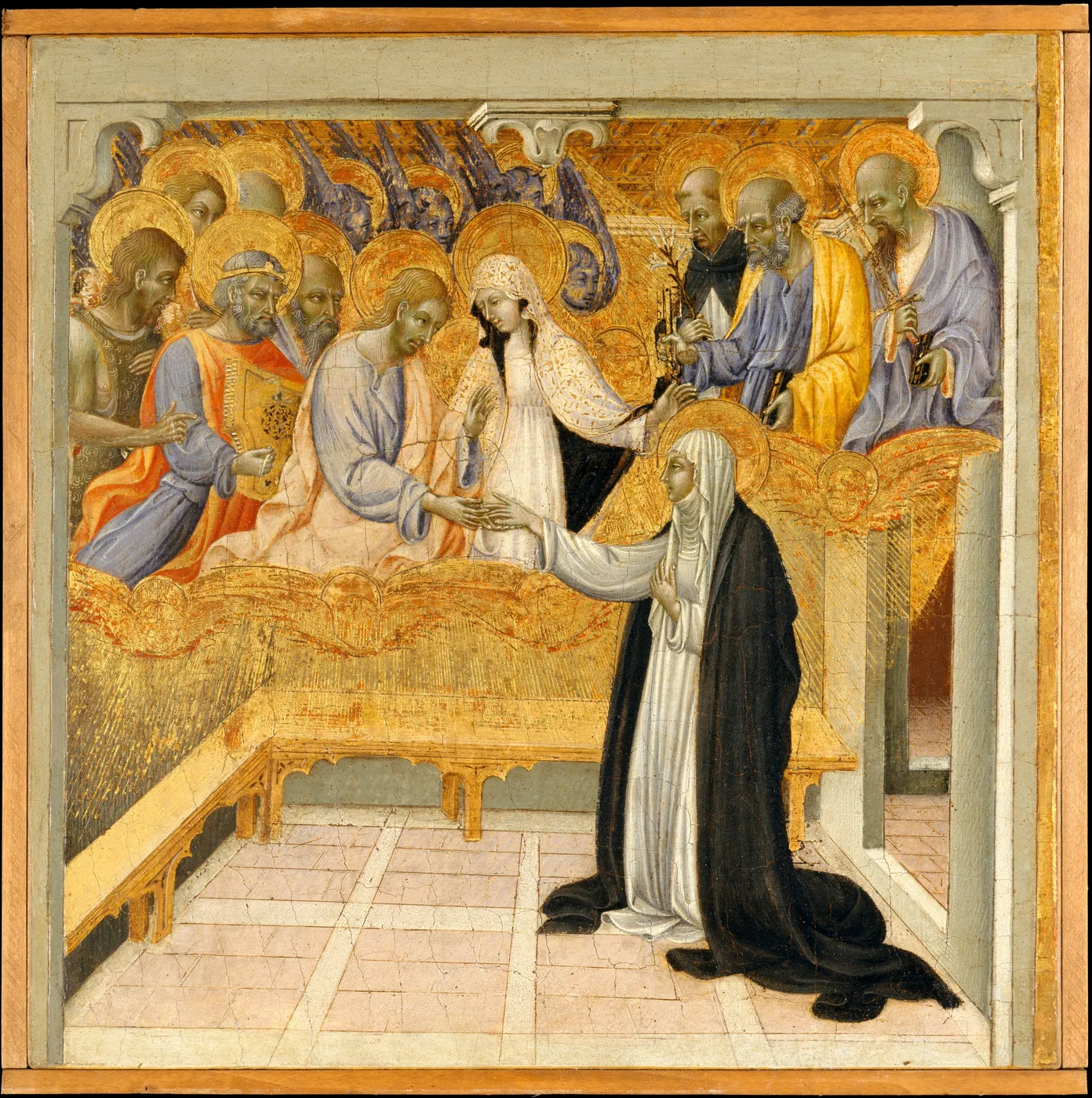
Image: Giovanni di Paolo; The Metropolitan Museum of Art — CC0. Source and rights

Feast: April 29
Patronage and associations: Europe and Italy, Nurses, People ridiculed for their faith, Fire prevention
Historical period: Late medieval Italy (1347–1380)
The Memorial of St. Catherine of Siena, Virgin and Doctor of the Church, is celebrated on April 29 in the General Roman Calendar; in Europe she is honored as a co-patronal feast.
Quick facts
- Born
- March 25, 1347, Siena, Italy
- Died
- April 29, 1380, Rome
- Vocation
- Dominican tertiary and Doctor of the Church
- Major work
- The Dialogue of Divine Providence
- Declared Doctor of the Church
- 1970, by Pope Paul VI
Who Was St. Catherine of Siena?
St. Catherine was born Caterina Benincasa in Siena in 1347, one of the youngest children in a very large family. From an early age she desired to give her life completely to Christ. Her family expected marriage, and conflict followed when she resisted that plan. Catherine eventually joined the Mantellate, a community of Dominican laywomen, while continuing to live in the world rather than entering a cloister.
Her intense prayer did not keep her isolated. Catherine served people who were poor or sick, including during outbreaks of plague. Others gathered around her for counsel. She could not read fluently at first, but she dictated letters to political rulers, clergy, religious communities, and ordinary Christians. Her words combined affection with direct calls to conversion, courage, and responsibility.
Catherine lived during a period of conflict within Italian cities and crisis in the Church. The popes had resided in Avignon rather than Rome for decades. She urged Pope Gregory XI to act courageously and return to Rome, while also working for peace among divided political powers. It would be simplistic to credit one person alone for complex historical decisions, but Catherine’s correspondence and personal appeals formed part of the pressure for reform and return.
Her spiritual teaching centers on God’s merciful love, knowledge of self, love of neighbor, and Christ as the bridge between humanity and the Father. The Dialogue of Divine Providence presents teaching she dictated near the end of her life. Traditional accounts also describe mystical experiences and the stigmata. These extraordinary elements should not hide the practical discipline beneath them: prayer led Catherine toward service, truth-telling, and costly work for unity.
Catherine died in Rome in 1380 at age thirty-three. She was canonized in 1461, declared a Doctor of the Church in 1970, and named a co-patron of Europe in 1999. Her boldness was not permission for reckless criticism of the Church. She loved the Church enough to suffer for its holiness, address leaders honestly, and remain committed to unity. She teaches Catholics to combine courage with prayer, reform with fidelity, and contemplation with concrete service. Her authority grew from sacrifice and truthfulness, not from outrage alone.
What St. Catherine of Siena Teaches Us Today
1. Prayer should enlarge responsibility
Catherine’s contemplation moved her toward the sick, the poor, public conflict, and the needs of the Church.
2. Truth and love must remain together
She could challenge powerful people directly while still seeking their conversion and the unity of the Church.
3. Reform begins with personal holiness
Catherine called others to change while continually submitting her own motives and life to God.
A Prayer Asking for St. Catherine’s Intercession
Merciful Father, you gave St. Catherine of Siena deep prayer, practical charity, and courage to speak the truth. Through her intercession, free me from cowardice and from criticism without love. Teach me to serve people who suffer, pray for the Church, and work for reform without abandoning unity. Give wisdom to Church leaders and humility to everyone who advises them. St. Catherine, pray that love for Christ may make me both faithful and brave. Amen.
Original prayer written by Catholic Explained.