St. Dymphna
A martyr long honored as a patron of people living with mental illness, emotional distress, and family trauma.
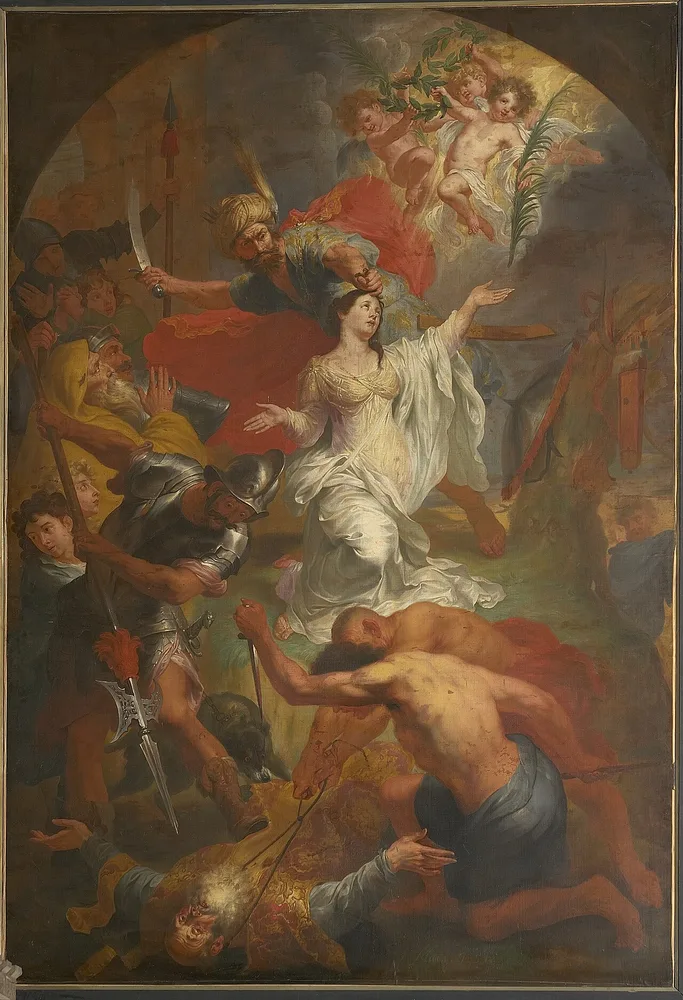
Image: Godfried Maes — Public domain. Source and rights

Feast: May 15
Patronage and associations: People living with mental illness, People experiencing anxiety or emotional distress, Mental-health professionals
Historical period: Early Middle Ages; traditionally placed in the 7th century
St. Dymphna is traditionally commemorated on May 15. Her story comes principally from longstanding oral tradition recorded centuries after the period in which she is said to have lived.
Quick facts
- Origin
- Traditionally associated with Ireland
- Place of veneration
- Geel, Belgium
- Feast day
- May 15
- Witness
- Virgin and martyr in longstanding tradition
- Historical note
- Her medieval biography explicitly drew upon oral tradition
Who Was St. Dymphna?
St. Dymphna is remembered as a young Christian martyr and as a patron of people who live with mental illness or severe emotional distress. Her feast is traditionally celebrated on May 15. The details of her life require care: the written account appeared centuries after the time in which she is said to have lived, and its author said that he was drawing from oral tradition. Catholics can honor the witness preserved in that tradition without presenting every detail as if it were documented by contemporary records.
According to the traditional account, Dymphna was the daughter of an Irish ruler and a Christian mother. After her mother died, her father’s grief and instability turned into a threat against his daughter. Dymphna had made a commitment to Christ and refused her father’s demand that she marry him. She fled with her priest, Gerebernus, and companions, eventually settling near Geel in present-day Belgium.
The tradition says that Dymphna used her resources to care for people who were poor and sick. Her father found the group, killed Gerebernus, and then killed Dymphna when she would not surrender. She came to be honored as a martyr because she remained faithful to Christ in the face of violence and coercion.
Over time, Geel became closely associated with care for people experiencing mental illness. Pilgrims came to Dymphna’s shrine seeking prayer and healing, and local families welcomed some of them into their homes. That community tradition became notable for treating vulnerable people as neighbors rather than simply isolating them. It gives Dymphna’s devotion a practical dimension: prayer should move Christians toward patient, dignified care.
Asking St. Dymphna to pray for us is not a substitute for professional help, medical treatment, crisis support, or safe boundaries. Catholic faith does not require someone to remain in danger or to hide serious symptoms. Her story can instead remind us that suffering people deserve protection, companionship, skilled care, and hope. When Catholics seek her intercession, they are asking a fellow member of Christ’s Body to pray that God will give grace, wisdom, and faithful support through whatever help is needed.
What St. Dymphna Teaches Us Today
1. Protect the dignity of vulnerable people
Christian care treats a suffering person as a neighbor with dignity, not as a problem to hide.
2. Faith and professional care belong together
Prayer can accompany therapy, medical care, crisis support, and practical safety; it does not replace them.
3. Courage can include leaving danger
Dymphna’s tradition reminds us that coercion and abuse are not holy crosses someone must quietly accept.
A Prayer Asking for St. Dymphna’s Intercession
God of mercy, you remain close to every person who is anxious, overwhelmed, wounded, or afraid. Through the intercession of St. Dymphna, give courage to those who suffer, wisdom to caregivers and clinicians, protection to people in unsafe homes, and patience to families and friends. Lead each person toward trustworthy help and faithful companions. St. Dymphna, pray for us, that we may receive God’s peace and offer compassionate care without shame or judgment. Amen.
Original prayer written by Catholic Explained.