St. Francis de Sales
A bishop and spiritual teacher who showed ordinary Christians that holiness is possible in every honest vocation and daily responsibility.
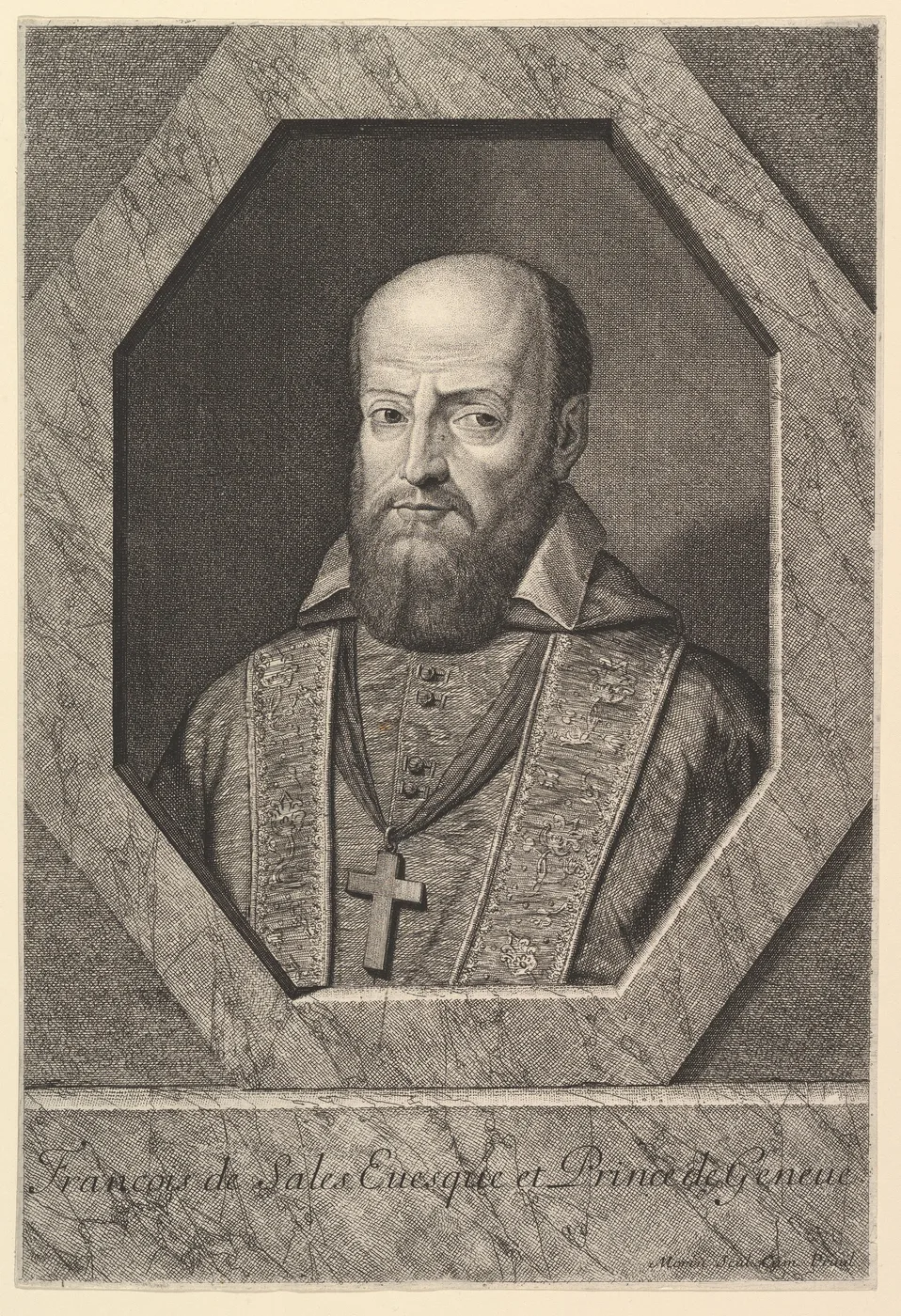
Image: Jean Morin; The Metropolitan Museum of Art — CC0. Source and rights

Feast: January 24
Patronage and associations: Writers and journalists, Catholic press, Authors, People who are deaf
Historical period: Catholic Reformation (1567–1622)
The Memorial of St. Francis de Sales, Bishop and Doctor of the Church, is celebrated on January 24 in the General Roman Calendar.
Quick facts
- Born
- August 21, 1567, Savoy
- Died
- December 28, 1622, Lyon, France
- Vocation
- Bishop of Geneva and Doctor of the Church
- Major work
- Introduction to the Devout Life
- Founded with St. Jane de Chantal
- Order of the Visitation
Who Was St. Francis de Sales?
St. Francis de Sales was born in 1567 into a noble family in Savoy. His father planned a respected legal career for him, and Francis received an excellent education in Paris and Padua. During his student years he passed through a severe spiritual crisis centered on fear of damnation. He found peace not by solving every hidden question about God’s plan, but by placing himself in God’s mercy and choosing to love God without conditions.
Francis earned a law degree, but he believed God was calling him to the priesthood. This disappointed his father, yet Francis proceeded with patience rather than contempt. After ordination, he volunteered for a difficult mission in the Chablais region, where many communities had become Protestant. Public preaching was often impossible, so he wrote short explanations of Catholic teaching and distributed them in written form. This later contributed to his patronage of writers and journalists.
As Bishop of Geneva, Francis governed from Annecy because Geneva itself was under Calvinist control. He trained clergy, preached, taught children, visited parishes, and corresponded with people seeking spiritual direction. He defended Catholic teaching while insisting that truth must be communicated with charity. His reputation for gentleness did not mean he lacked conviction. It meant he worked to master anger so that zeal would serve the person in front of him.
His Introduction to the Devout Life was addressed especially to laypeople. Francis rejected the idea that serious holiness belonged only to monasteries. A parent, soldier, craftsperson, widow, or court official should practice devotion according to the duties of that vocation. With St. Jane Frances de Chantal he founded the Order of the Visitation. His Treatise on the Love of God explored how grace draws the human heart toward loving union with God.
Francis died in 1622, was canonized in 1665, and was declared a Doctor of the Church in 1877. His teaching remains practical: begin again without discouragement, fulfill present duties with love, and do not measure holiness by emotional intensity. He helps busy Catholics understand that patience in conversation, integrity at work, and gentleness at home are not distractions from spiritual life. They are among its ordinary places.
What St. Francis de Sales Teaches Us Today
1. Holiness fits every honest vocation
Prayer and virtue should shape the duties you actually have, not an imaginary life with fewer responsibilities.
2. Gentleness is disciplined strength
Speaking calmly does not weaken truth. It helps truth reach another person without unnecessary injury.
3. Begin again without panic
Growth in holiness is patient. When you fail, return to God rather than making discouragement another form of self-focus.
A Prayer Asking for St. Francis de Sales’s Intercession
God of patience and truth, you formed St. Francis de Sales into a gentle pastor and clear teacher. Through his intercession, help me pursue holiness in the vocation and responsibilities you have given me. Guard my speech from anger, pride, and careless exaggeration. Make my words truthful, charitable, and useful to the person who hears them. St. Francis de Sales, pray for writers, journalists, teachers, and everyone who must explain the faith with both courage and love. Amen.
Original prayer written by Catholic Explained.