St. Francis of Assisi
The Italian friar whose joyful poverty, love of Christ, and care for creation inspired the Franciscan movement and renewed the Church.
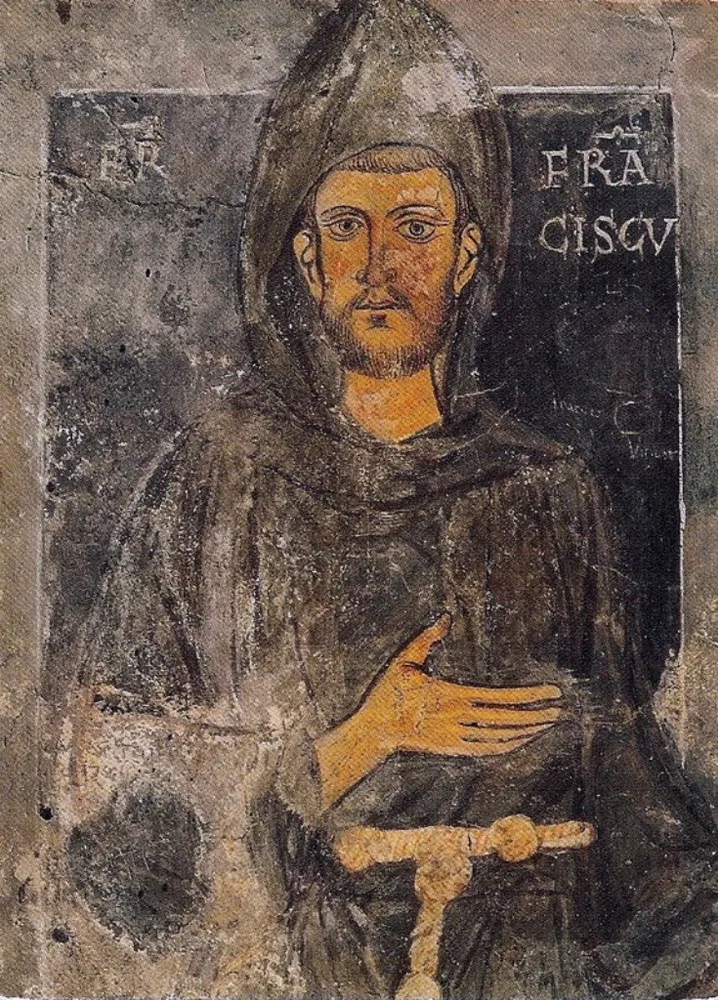
Image: Parzi — Public domain. Source and rights

Feast: October 4
Patronage and associations: Animals and ecology, Merchants, Peace, Italy
Historical period: High medieval Italy (1181/82–1226)
The Memorial of St. Francis of Assisi is celebrated on October 4 in the General Roman Calendar.
Quick facts
- Born
- 1181 or 1182, Assisi, Italy
- Died
- October 3, 1226, near Assisi
- Vocation
- Deacon and founder of the Friars Minor
- Religious family
- Franciscan movement
- Canonized
- July 16, 1228, by Pope Gregory IX
Who Was St. Francis of Assisi?
St. Francis was born in Assisi around 1181 or 1182 to a prosperous merchant family. As a young man he enjoyed status, fine clothing, and dreams of military glory. War with neighboring Perugia led to imprisonment, illness, and a long reconsideration of the life he had been pursuing. His conversion unfolded gradually through prayer, encounters with people experiencing poverty and disease, and a growing attraction to the poor and crucified Christ.
While praying before the crucifix at the neglected church of San Damiano, Francis understood Christ to be calling him to repair the Church. At first he responded literally by rebuilding small churches. His path soon widened. He renounced his claim to family wealth and embraced a life of Gospel poverty, manual work, preaching, and service. Companions joined him, and Pope Innocent III gave approval to their simple form of life.
Francis did not reject creation; he received it as gift. His Canticle of the Creatures praises God through the sun, moon, water, earth, and even death. That is why devotion to Francis should not be reduced to affection for animals. His love of creation came from worship of the Creator and solidarity with people who were poor or excluded. He also had a deep devotion to the Eucharist and insisted on reverence for Christ’s presence.
During the Fifth Crusade, Francis crossed military lines and met Sultan al-Kamil in Egypt. The encounter did not end the war, but it remains a striking example of courageous Christian witness without contempt for the person before him. Near the end of his life, Francis received the stigmata according to early Franciscan testimony, bearing marks associated with Christ’s wounds. He died in 1226 and was canonized less than two years later.
Francis’s movement grew into several religious families and a worldwide lay Franciscan tradition. His life challenges both romanticism and comfort. Simplicity was not an aesthetic for him; it was freedom to follow Jesus and serve others. He reminds Catholics that care for creation, peace, reverence, evangelization, and love for the poor belong together because all flow from Christ. His example invites practical choices, not merely admiration for a beautiful medieval story.
What St. Francis of Assisi Teaches Us Today
1. Simplicity creates freedom
Francis gave up what controlled him so he could be available to Christ and to people in need.
2. Creation points beyond itself
Love for animals and the earth becomes Christian when it leads to gratitude, stewardship, and praise of the Creator.
3. Peace requires courageous presence
Francis crossed a battlefield to meet another person face to face without abandoning his faith.
A Prayer Asking for St. Francis’s Intercession
Creator God, you led St. Francis of Assisi from ambition to the freedom of the Gospel. Through his intercession, loosen my attachment to possessions, status, and comfort. Teach me to recognize Christ in people who are poor or excluded, to care responsibly for creation, and to seek peace without hiding the truth. St. Francis, pray that my words and choices may praise God, serve my neighbor, and make the joy of Jesus visible in ordinary life. Amen.
Original prayer written by Catholic Explained.