St. John Paul II
The Polish pope who proclaimed Christ across the world, defended human dignity, helped renew Catholic teaching, and witnessed to hope through suffering.
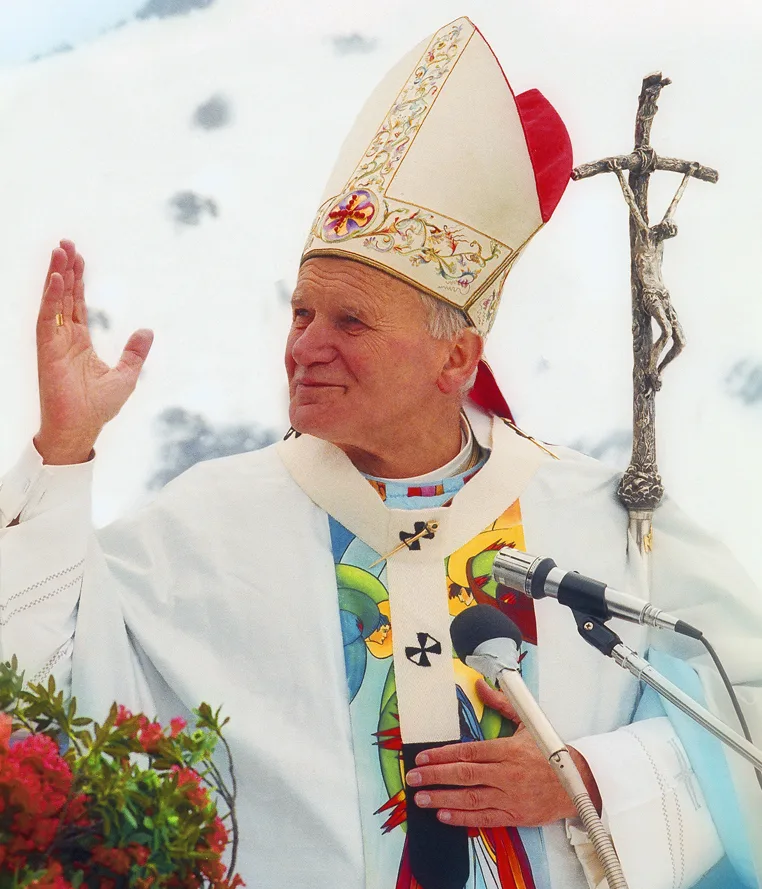
Image: Gregorini Demetrio — CC BY-SA 3.0. Source and rights

Feast: October 22
Patronage and associations: World Youth Day, Young Catholics, Families, Poland
Historical period: Modern era (1920–2005)
The optional memorial of St. John Paul II, Pope, is celebrated on October 22 in the General Roman Calendar, the anniversary of the inauguration of his pontificate.
Quick facts
- Born
- May 18, 1920, Wadowice, Poland
- Died
- April 2, 2005, Vatican City
- Birth name
- Karol Józef Wojtyła
- Pontificate
- October 16, 1978–April 2, 2005
- Canonized
- April 27, 2014, by Pope Francis
Who Was St. John Paul II?
St. John Paul II was born Karol Józef Wojtyła in Wadowice, Poland, in 1920. His mother, older sister, brother, and father all died before he reached adulthood. During the Nazi occupation he worked in a quarry and chemical factory while studying for the priesthood in a clandestine seminary. These experiences formed a conviction that every human person possesses a dignity no state, ideology, or circumstance can erase.
Wojtyła was ordained a priest in 1946 and pursued advanced studies before serving students, families, and parishes in Poland. He became a bishop and participated actively in the Second Vatican Council, contributing especially to its teaching on the Church in the modern world and religious freedom. He served as Archbishop of Kraków under communist rule, combining pastoral care with intellectual resistance to systems that reduced the human person.
Elected pope in 1978, he took the name John Paul II and began his ministry with a call not to be afraid to open the doors to Christ. He traveled widely, preached the Gospel across cultures, and helped establish World Youth Day. His teaching addressed work, family, human freedom, moral life, the body, social justice, ecumenism, and the relationship between faith and reason. He promulgated the Catechism of the Catholic Church and the revised Latin Code of Canon Law.
In 1981 an assassin shot him in St. Peter’s Square. John Paul II survived and later visited the attacker in prison, offering personal forgiveness. His role in the collapse of communism was significant, especially in Poland, though that history involved many people and forces. In later years Parkinson’s disease and other illness visibly limited him. He continued his ministry, allowing the world to see dependence and suffering rather than hiding them.
John Paul II died on April 2, 2005, the vigil of Divine Mercy Sunday, and was canonized in 2014. Admiration should not prevent serious historical study of decisions made during a long pontificate. Sainthood does not mean every administrative judgment was perfect. It recognizes heroic Christian virtue. His enduring witness calls Catholics to center freedom on truth, defend every person’s dignity, forgive enemies, and face suffering with Christ-centered hope.
What St. John Paul II Teaches Us Today
1. Human dignity does not depend on power
Illness, age, poverty, politics, and social usefulness cannot remove the worth God gives each person.
2. Freedom needs truth and love
Doing whatever we want is not complete freedom; freedom matures when it chooses what is good.
3. Do not be afraid to follow Christ
John Paul II’s repeated invitation calls Catholics to bring Christ into public life, family decisions, and personal suffering.
A Prayer Asking for St. John Paul II’s Intercession
Lord Jesus Christ, you called St. John Paul II to proclaim your Gospel across nations and to defend the dignity of every human person. Through his intercession, free me from fear, strengthen families and young people, and help me use freedom in service of truth and love. Give courage to those suffering under violence, oppression, age, or illness. St. John Paul II, pray that I may open every part of my life to Christ. Amen.
Original prayer written by Catholic Explained.