St. Padre Pio
A Capuchin priest known for prayer, patient suffering, long hours of confession, and directing people toward Christ’s mercy and the Eucharist.
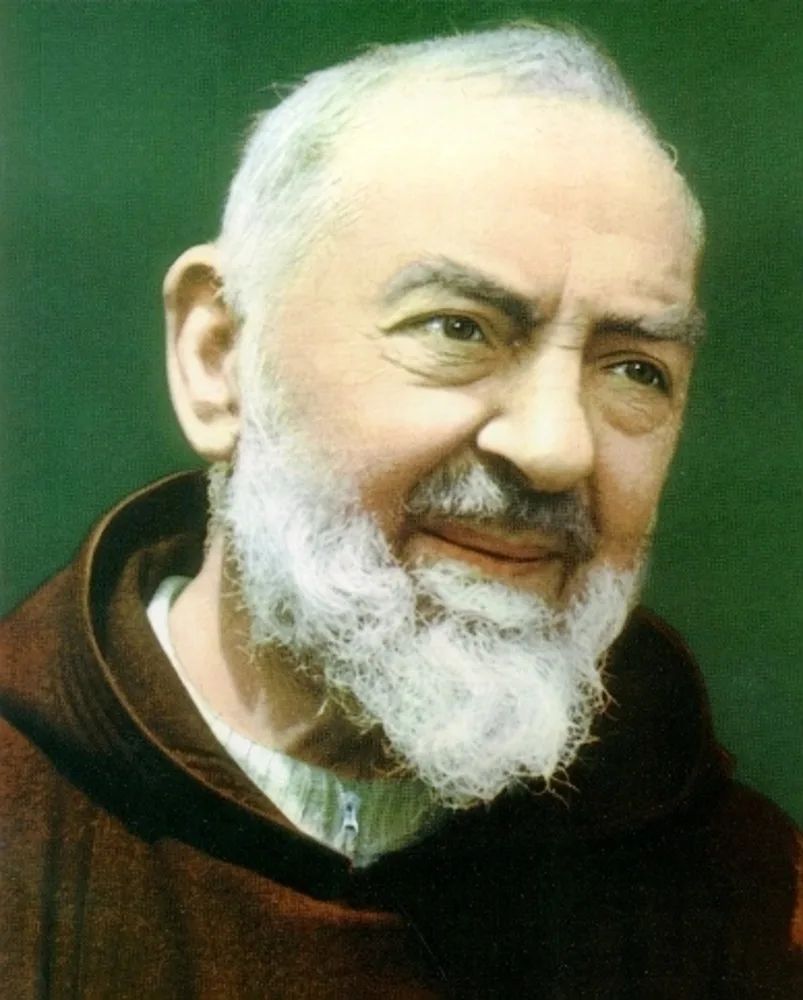
Image: Original uploader Manfredonia; derivative work MisterNox — Public domain. Source and rights

Feast: September 23
Patronage and associations: Civil-defense volunteers, Adolescents, People experiencing suffering and illness, Catholic confessors
Historical period: Modern Italy (1887–1968)
The Memorial of St. Pius of Pietrelcina, Priest, is celebrated on September 23 in the General Roman Calendar.
Quick facts
- Born
- May 25, 1887, Pietrelcina, Italy
- Died
- September 23, 1968, San Giovanni Rotondo
- Birth name
- Francesco Forgione
- Religious family
- Order of Friars Minor Capuchin
- Canonized
- June 16, 2002, by St. John Paul II
Who Was St. Padre Pio?
St. Padre Pio was born Francesco Forgione in Pietrelcina, Italy, in 1887. His family lived simply and practiced the Catholic faith seriously. As a boy Francesco desired the priesthood and entered the Capuchin Franciscan order as a teenager, taking the name Pio. His health was fragile, which interrupted his formation and often required periods away from community life. He was ordained a priest in 1910.
In 1916 Padre Pio was assigned to the friary at San Giovanni Rotondo, where he remained for most of his life. Two years later he reported receiving the stigmata, wounds associated with the crucifixion of Jesus. The marks attracted enormous attention. Church authorities and medical examiners investigated, and restrictions were imposed at different periods. Catholics should not build devotion on sensational claims. Padre Pio’s canonization recognizes heroic holiness, not a duty to accept every story circulated about him.
His ordinary priestly ministry is central to understanding him. He celebrated Mass with intense attention and spent long hours hearing confessions. People sought his counsel, sometimes receiving direct correction. He encouraged prayer, repentance, trust in God, and perseverance. His well-known spiritual advice to pray, hope, and not worry should not be used to dismiss anxiety or suffering; it points toward placing real burdens before God while doing what faith and prudence require.
Padre Pio also helped establish the Casa Sollievo della Sofferenza, the Home for the Relief of Suffering, a modern hospital opened in 1956. This work shows that his response to illness was not prayer instead of medicine. It was prayer joined to skilled, organized care. He also promoted prayer groups that united spiritual life with support for the Church’s needs.
Padre Pio died in 1968 and was canonized by St. John Paul II in 2002. His life attracts people because of extraordinary reports, but his most reliable path is deeply Catholic and ordinary: Mass, confession, prayer, sacrifice, charity, and practical care for the sick. He reminds penitents that the confessional is not a place to perform goodness but to receive Christ’s mercy and begin again. The goal of devotion is deeper discipleship, not fascination with unexplained phenomena.
What St. Padre Pio Teaches Us Today
1. The sacraments are greater than spiritual excitement
Padre Pio directed attention toward Mass, confession, prayer, and conversion rather than curiosity about extraordinary events.
2. Prayer supports practical care
The hospital he helped establish shows that trusting God and using medicine belong together.
3. Mercy calls us to begin again
Honest confession is not humiliation for its own sake; it is an encounter with Christ’s forgiveness and a new path forward.
A Prayer Asking for St. Padre Pio’s Intercession
Merciful Jesus, you called St. Padre Pio to serve you through the Eucharist, confession, prayer, and care for people who suffered. Through his intercession, give me courage to confess my sins honestly, patience in trials, and wisdom to seek the help I need. Protect me from chasing spiritual excitement while neglecting ordinary faithfulness. St. Padre Pio, pray for priests, penitents, the sick, and everyone who struggles to hope. Amen.
Original prayer written by Catholic Explained.