St. Rita of Cascia
An Italian wife, mother, widow, and Augustinian nun whose life witnesses to prayer, forgiveness, and peace amid deep family suffering.
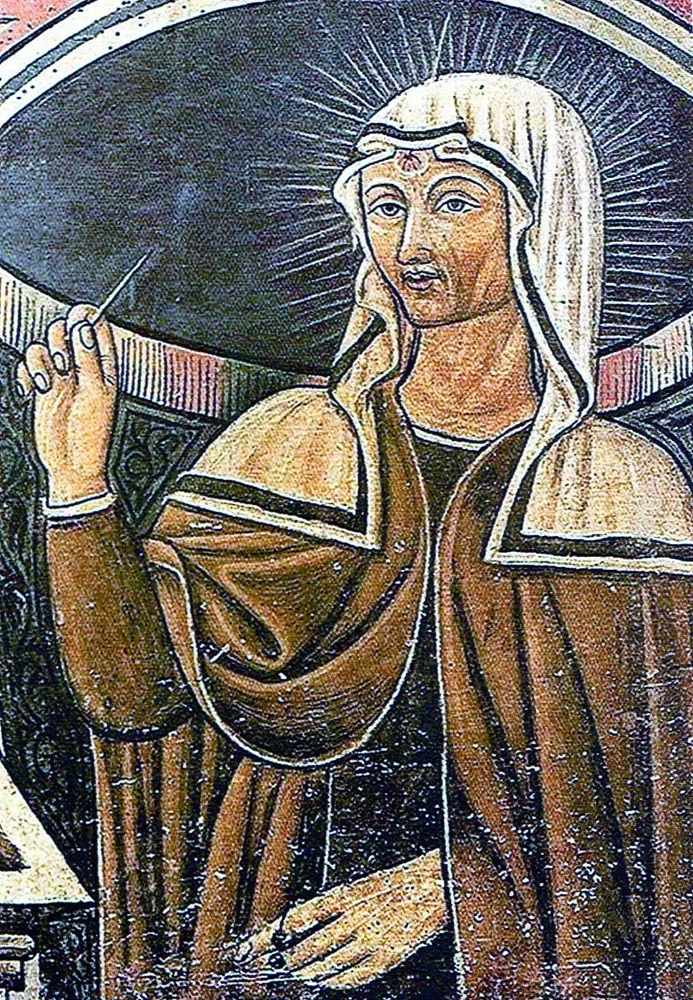
Image: Roscini Claudio — Public domain. Source and rights

Feast: May 22
Patronage and associations: Difficult marriages, Impossible causes, Widows, Reconciliation and family peace
Historical period: Late medieval Italy (c. 1381–1457)
St. Rita is celebrated as an optional memorial on May 22 in the General Roman Calendar.
Quick facts
- Born
- c. 1381, Roccaporena, Italy
- Died
- May 22, 1457, Cascia, Italy
- Vocation
- Wife, mother, widow, and Augustinian nun
- Religious family
- Order of St. Augustine
- Canonized
- May 24, 1900, by Pope Leo XIII
Who Was St. Rita of Cascia?
St. Rita was born Margherita Lotti near Cascia, Italy, around 1381. Accounts of her early life contain devotional traditions, so exact details vary, but the broad shape of her vocation is well established. Rita married Paolo Mancini and became the mother of two sons. Her family lived in a society marked by rivalries and cycles of revenge. Rita’s marriage brought real hardship, yet she worked patiently for peace within her home.
Paolo was eventually killed. Rita grieved her husband while also fearing that her sons would continue the feud through retaliation. Traditional accounts emphasize her prayer that violence would not claim their souls. Both sons died while still young, leaving Rita a widow without surviving children. Her story should not be romanticized: she knew betrayal, bereavement, fear for her family, and the loneliness of losing the people closest to her.
Rita sought admission to the Augustinian convent in Cascia. The community initially hesitated, in part because the local feud surrounding her family had not been resolved. Augustinian sources remember Rita as helping bring reconciliation before she entered. She then spent about forty years in religious life, devoted to prayer, charity, and the ordinary responsibilities of her community.
A longstanding tradition says that while praying before an image of Christ crowned with thorns, Rita received a wound on her forehead that united her suffering more closely to the Passion. Catholics need not treat devotion as a search for extraordinary signs. The deeper point is that Rita brought pain to Christ rather than allowing it to become hatred. She died on May 22, 1457, and was canonized by Pope Leo XIII in 1900.
Rita is often called a patron of impossible causes and difficult marriages. That title does not mean a particular reconciliation or family outcome is guaranteed. Her life offers something steadier: the witness of a woman who pursued peace without pretending that suffering was easy. She encourages Catholics in troubled families to seek safety, wise counsel, justice, forgiveness, and prayer—never to confuse holiness with remaining passive in the face of abuse. Reconciliation is a grace to seek, but it cannot be manufactured by denying danger, wrongdoing, or another person’s freedom.
What St. Rita of Cascia Teaches Us Today
1. Forgiveness can interrupt a cycle
Rita’s pursuit of peace shows that refusing revenge can protect a family from carrying violence into another generation.
2. Bring honest grief to Christ
Her life does not minimize loss. It shows that sorrow can be placed before Jesus without becoming bitterness.
3. Prayer and practical wisdom belong together
People in troubled homes can pray while also seeking safety, pastoral care, professional help, and just boundaries.
A Prayer Asking for St. Rita’s Intercession
Merciful God, you sustained St. Rita through marriage, motherhood, widowhood, grief, and religious life. Through her intercession, bring peace where my relationships are wounded and give me wisdom about the steps I should take. Protect those who are unsafe, soften hearts hardened by resentment, and keep suffering from turning into revenge. St. Rita, pray with me that I may forgive without denying truth, seek help without shame, and entrust every impossible situation to Jesus Christ. Amen.
Original prayer written by Catholic Explained.