St. Teresa of Calcutta
The founder of the Missionaries of Charity who served Christ among people who were dying, abandoned, poor, or treated as unwanted.
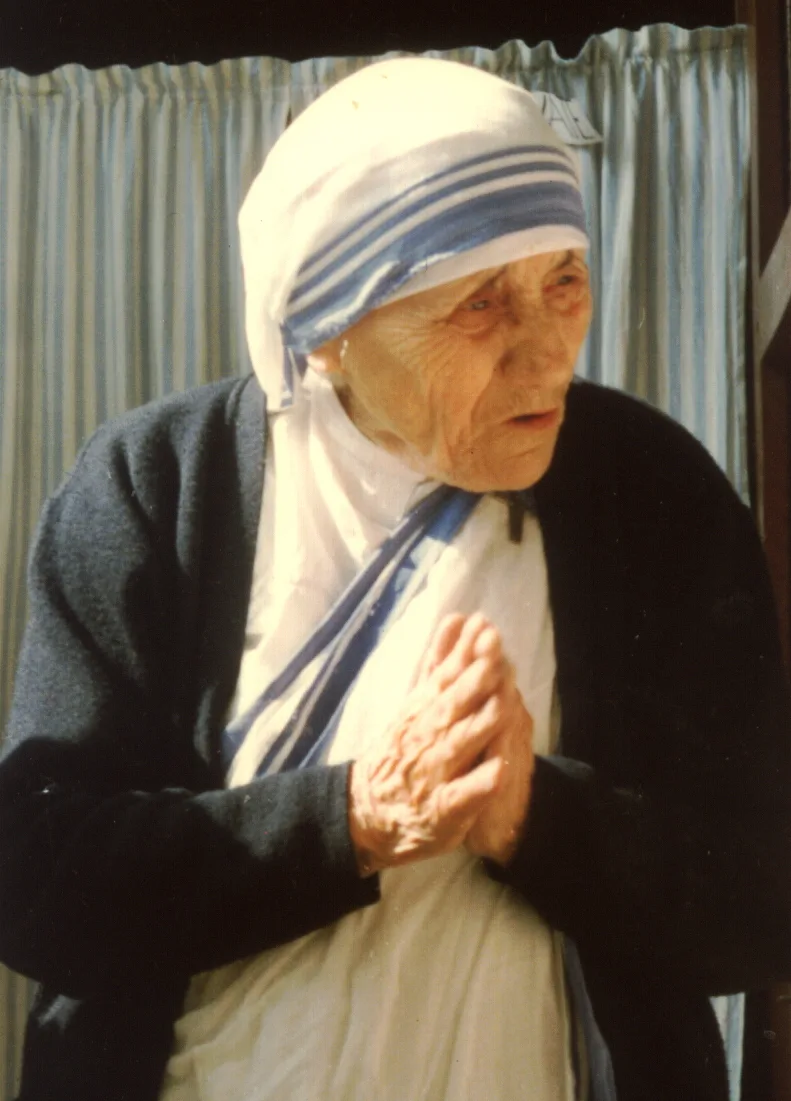
Image: Evert Odekerken — CC BY 2.5. Source and rights

Feast: September 5
Patronage and associations: Missionaries of Charity, World Youth Day, People serving the poor, Calcutta
Historical period: Modern era (1910–1997)
St. Teresa of Calcutta’s optional memorial was added to the General Roman Calendar in 2025 and is celebrated on September 5.
Quick facts
- Born
- August 26, 1910, Skopje
- Died
- September 5, 1997, Calcutta, India
- Birth name
- Anjezë Gonxhe Bojaxhiu
- Founded
- Missionaries of Charity
- Canonized
- September 4, 2016, by Pope Francis
Who Was St. Teresa of Calcutta?
St. Teresa of Calcutta was born Anjezë Gonxhe Bojaxhiu in Skopje in 1910 to an Albanian family. Her father died when she was young, and her mother formed the children in prayer and practical generosity toward people in need. At eighteen Anjezë left home to join the Sisters of Loreto. She traveled first to Ireland and then to India, where she received the name Sister Mary Teresa and became a teacher.
Teresa made final vows with the Loreto Sisters and eventually became headmistress of a girls’ school in Calcutta. In 1946, while traveling by train for retreat, she experienced what she called a “call within a call”: a conviction that Jesus was asking her to leave the convent school and serve him among the poorest and most abandoned people. She sought permission rather than acting independently and spent time receiving basic medical training.
After beginning work in the streets, Teresa gathered companions. The Missionaries of Charity became a religious congregation in 1950. Their work included homes for people who were dying, abandoned children, people with leprosy, and others whose needs were often ignored. Teresa became internationally known and received the Nobel Peace Prize in 1979. Fame brought opportunities to defend human dignity, but it also risked turning a demanding vocation into a comforting image.
Letters published after her death revealed that Teresa experienced prolonged spiritual darkness and a painful absence of felt consolation. She continued praying and serving even when God seemed silent. That does not make emotional distress automatically holy or remove the need for care. It shows that faithfulness can persist when religious feelings disappear.
Teresa died in 1997 and was canonized by Pope Francis in 2016. In 2025 her September 5 celebration was added to the General Roman Calendar as an optional memorial. Her life challenges Catholics to look beyond slogans. Love for the poor requires attention to a real person, respect for life, competent care, and willingness to stay present. She teaches that serving Christ often begins with the person nearby who feels unwanted. Charity must preserve dignity rather than making the person receiving help into a project or symbol.
What St. Teresa of Calcutta Teaches Us Today
1. Love begins with the person before us
Large problems matter, but charity becomes real through concrete attention to an actual neighbor.
2. Faithfulness can continue without consolation
A lack of strong religious feelings does not mean God has abandoned us or that quiet service has no value.
3. Human dignity is never measured by usefulness
The sick, unborn, elderly, poor, disabled, and abandoned remain persons made in God’s image.
A Prayer Asking for St. Teresa of Calcutta’s Intercession
Jesus, you made yourself known to St. Teresa of Calcutta in people who were poor, sick, dying, or abandoned. Through her intercession, open my eyes to the person near me who needs patient love. Keep me faithful when prayer feels dry and protect me from using good intentions as a substitute for practical service. St. Teresa, pray for the Missionaries of Charity, for all who care for vulnerable people, and for everyone who fears they are unwanted. Amen.
Original prayer written by Catholic Explained.