St. Thérèse of Lisieux
A Carmelite nun and Doctor of the Church whose “little way” teaches trust, humility, and love in ordinary actions.
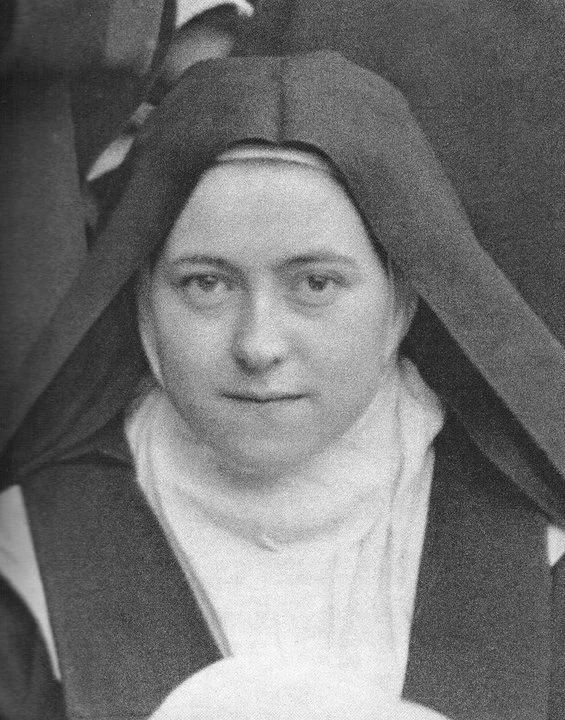
Image: Céline Martin — Public domain. Source and rights

Feast: October 1
Patronage and associations: Missions, Missionaries, Florists, People seeking a simple path of trust in God
Historical period: 19th century (1873–1897)
Her memorial is celebrated on October 1 in the General Roman Calendar.
Quick facts
- Full name
- Marie Françoise-Thérèse Martin
- Born
- January 2, 1873, Alençon, France
- Died
- September 30, 1897, Lisieux, France
- Vocation
- Discalced Carmelite nun
- Canonized
- May 17, 1925, by Pope Pius XI
- Named Doctor of the Church
- October 19, 1997, by Pope St. John Paul II
Who Was St. Thérèse of Lisieux?
Thérèse Martin was born in Alençon, France, in 1873, the youngest surviving daughter of Louis and Zélie Martin. Her mother died when Thérèse was four, and the family later moved to Lisieux. She experienced grief, sensitivity, and periods of illness while growing up. Her path to holiness did not begin with natural confidence. It developed through a growing trust that God’s mercy could work through her weakness.
Thérèse wanted to enter the Carmelite monastery in Lisieux while still very young. Because of her age, she faced delays and even appealed to Pope Leo XIII during a family pilgrimage to Rome. She entered Carmel in 1888 at fifteen. Her life there was quiet: prayer, community responsibilities, small sacrifices, and relationships with sisters whose personalities could be difficult. There were no public missions or large projects.
Within that hidden life, Thérèse discovered what became known as her “little way.” She understood that she could not reach holiness by impressive achievements or sheer willpower. Instead, she would approach God with a child’s confidence, receive his mercy, and do ordinary things with great love. This was not spiritual laziness. It meant choosing patience, forgiveness, and charity precisely where nobody applauded.
Thérèse also felt a strong missionary vocation. She supported missionaries through prayer and correspondence even though she never left her monastery. During her final illness from tuberculosis, she passed through intense physical suffering and a painful trial of faith. She died in 1897 at twenty-four. Her autobiographical writings, later published as Story of a Soul, brought her spiritual teaching to readers around the world.
Pope Pius XI canonized Thérèse in 1925 and named her a patroness of the missions in 1927. In 1997 Pope St. John Paul II declared her a Doctor of the Church, recognizing the importance of her teaching for the whole Church. Her witness remains practical for anyone who feels too ordinary, weak, busy, or unnoticed to become holy. Thérèse does not ask us to manufacture greatness. She points us toward trust in God and faithful love in the next small duty placed before us.
What St. Thérèse of Lisieux Teaches Us Today
1. Small actions can carry great love
The hidden choice to be patient, honest, or kind can become a real offering to God.
2. Weakness can lead to trust
Christian humility admits limits and relies on God’s mercy rather than pretending to be self-sufficient.
3. Prayer participates in mission
Not every Catholic travels or teaches publicly, but every Catholic can support the Church’s mission through prayer and sacrifice.
A Prayer Asking for St. Thérèse’s Intercession
Merciful Father, you taught St. Thérèse to trust you with the confidence of a child and to offer small acts with great love. Through her intercession, free me from discouragement and the need to be noticed. Help me be faithful in today’s duties, patient with the people near me, and confident in your mercy when I see my weakness. St. Thérèse of Lisieux, pray for me, that my ordinary life may become an offering of love to God and neighbor. Amen.
Original prayer written by Catholic Explained.